House of Commons event launches 10-year strategic vision to end exploitation in the UK
June 17, 2026
At the House of Commons, parliamentarians, experts, and survivors launched Decade of dignity – a collaborative 10-year vision to overhaul the UK’s response to modern slavery and exploitation. Discover the key pillars driving this critical call for renewed leadership and systemic change.
A Decade of dignity: why the UK needs a systemic shift to end modern slavery
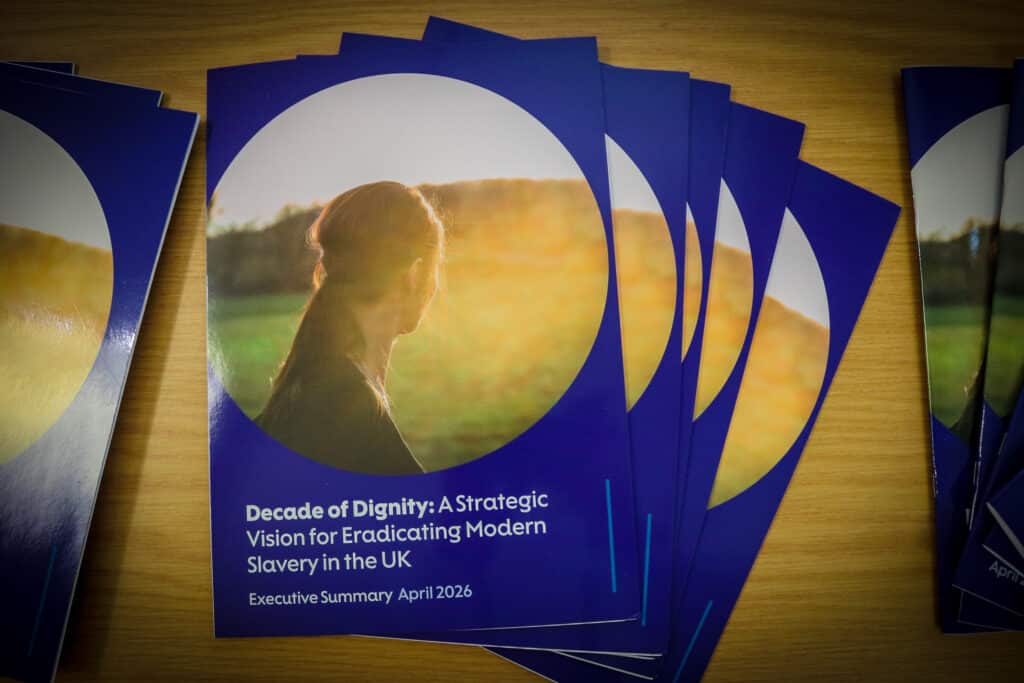
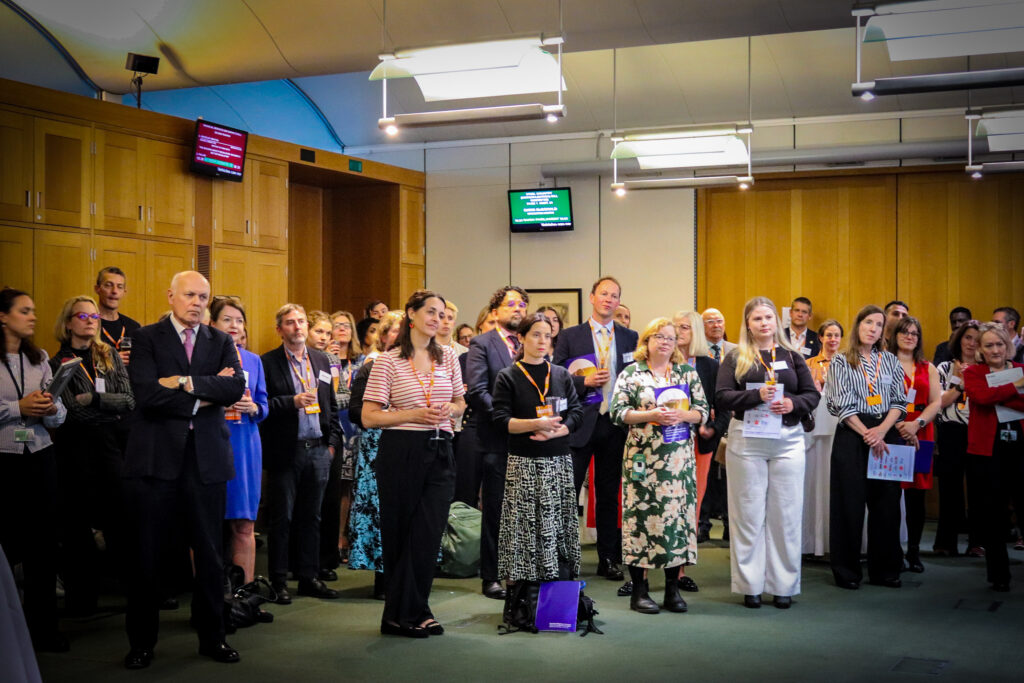
Modern slavery strips away freedom through coercion, leaving deep psychological scars and eroding supply chains. With over 130,000 people estimated to be living in modern slavery across the UK, this urgent crisis cannot be ignored. Despite the 2015 Modern Slavery Act, the national response has faltered, allowing exploiters to operate in a ‘low risk, high reward’ environment. To confront this, leaders gathered at the House of Commons to launch a new report Decade of dignity: A Strategic Vision for Eradicating Modern Slavery in the UK. Hosted by Carolyn Harris MP, the event united parliamentarians, civil servants, businesses, practitioners and survivors. As part of a consortium of anti-slavery organisations behind this report, we are immensely proud to have co-developed this shared vision.
The discussions highlighted the need to reframe the political conversation. Tom Collins MP, Officer of the All-Party Parliamentary Group on Human Trafficking and Modern Slavery, noted: “For most people, immigration and trafficking form the same part of one hot mess. We know they’re not the same, we know they’re linked, and we know what’s needed.”
He backed the strategy’s unified focus.
“I think this report is absolutely fantastic, I am so pleased that it’s picked up the four points so brilliantly about corporate accountability, about criminal justice, about survivor centred support, and about owning everything across government.”
Tatiana Gren-Jardan, Head of Policy and Advocacy at Justice and Care, added:
“We are at a pivotal moment. The scale and complexity of exploitation are evolving, and our response must evolve with it. We recognise that in the longer term, a holistic vision and strategy on modern slavery requires a whole society and whole of government approach that makes tackling this issue everyone’s business with a strong focus on holistic prevention and early intervention.”
The Minister for Border Security and Asylum, Alex Norris MP, welcomed the report in his introductory speech and said that:
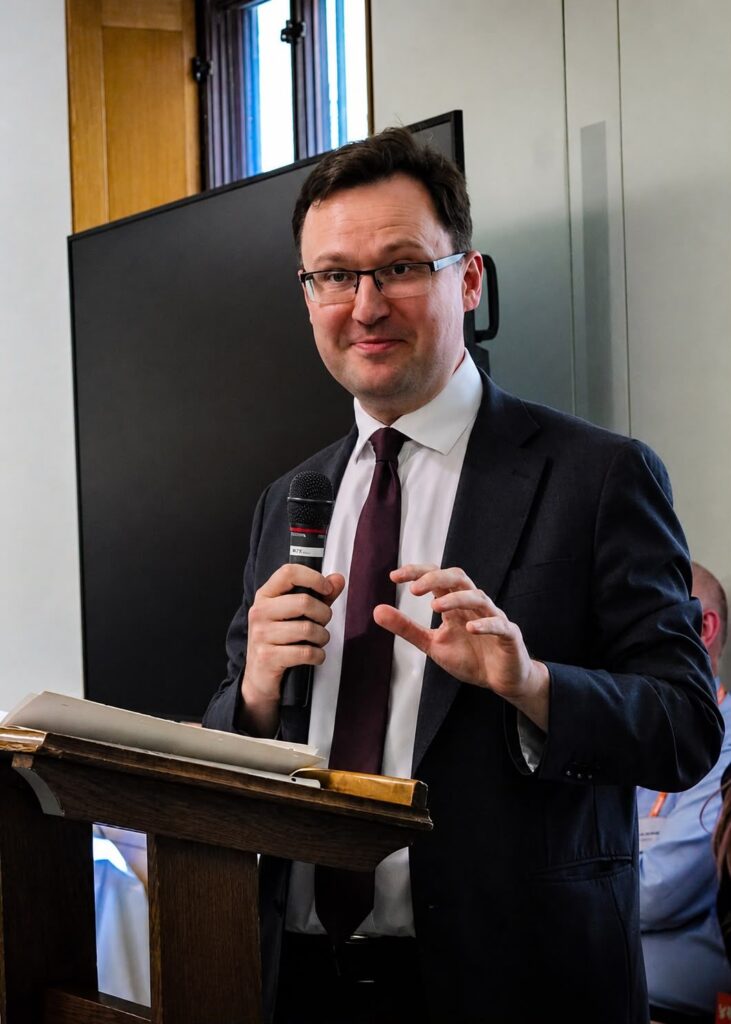
“It [modern slavery] is an issue I care deeply about, and one I see the impact of in my work every day. Tackling modern slavery is a responsibility across Government departments.”
Four priorities for action
To guide governance, the report outlines four essential priorities:
- Stronger corporate accountability: mandatory human rights due diligence to eliminate forced labour from value chains.
- A tougher criminal justice response: elevating modern slavery to a core policing priority to disrupt trafficking networks.
- A survivor-centred system: reforming frameworks to provide long-term, needs-based care and support recovery.
- A national strategy for child exploitation: a UK-wide approach grounded in children’s rights to safeguard vulnerable youth.
Corporate accountability and enforcement
Andrew Wallis OBE, CEO of Unseen, highlighted how a lack of regulation penalises ethical practices.
“Every responsible company represented at the report’s launch event has been bearing the operational costs of genuine due diligence, while less scrupulous competitors fail to publish a modern slavery statement and undercut them on price,” he said. “We have engineered a market that punishes ethical business. That is not a moral failure. It is a market failure with a well-established legislative remedy, which we have proposed in this report.”
Independent Anti-Slavery Commissioner Eleanor Lyons reinforced how the report aligns with frontline realities.
“The strategic vision report recognises that exploitation in the UK is widespread, evolving, and deeply harmful,” she said. “Behind every case is a person whose life has been shaped by coercion, control, and abuse.”
Lyons welcomed the document as a practical roadmap.
“The report is a serious, practical and much needed contribution to how the UK can once again become a world leader in tackling modern slavery. The recommendations align closely with I have been calling for: a whole-of-government response, stronger enforcement, survivor-centred reform, and a new legislative framework on forced labour and corporate accountability.”
The report also urges the government to treat modern slavery as a core policing priority and a serious economic crime that impacts national security. This requires sustained investment in specialist modern slavery and human trafficking teams, financial investigators, and advanced data analytics.
“For too long, perpetrators have operated in a low-risk, high-reward environment, profiting from the exploitation of vulnerable people with little fear of prosecution,” the report says.
Putting survivors at the centre
At the heart of Decade of dignity is placing survivors at the centre of policy. A survivor movingly shared the deep psychological toll of exploitation.
“Survivors of modern slavery often endure severe psychological trauma,” they said. “Many experience symptoms akin to PTSD, anxiety, and depression due to their exploitation. This long-term psychological harm is not just a personal struggle; it affects their ability to reintegrate into society. We must recognise that healing is a journey, and without proper mental health support, many survivors face ongoing challenges that hinder their recovery.”
He emphasised that public understanding is as crucial as legislation.
“The impact of modern slavery extends far beyond the immediate trauma. Survivors often find it incredibly difficult to reintegrate into society. Stigma, discrimination, and a lack of understanding from the public create barriers that isolate them further. It’s vital that we foster a societal environment that welcomes survivors, providing them with the necessary resources and community support to rebuild their lives.”
Alison Logier, Director of Modern Slavery Response at Hestia, noted that the British electorate heavily backs these reforms.
“Supporting victims of modern slavery and trafficking is essential to secure prosecutions, prevent re-trafficking and disrupt exploitation,” she said. “The public recognises this too: a recent survey by Hestia showed that 78% of the British public believe the government should do more to support victims of modern slavery. Success in 10 years’ time will not only be measured by the number of traffickers convicted, but by whether survivors are living safely, independently and with dignity.”
Safeguarding children
Patricia Durr, CEO at ECPAT, issued an urgent call to protect younger victims through a unified strategy:
“We need a cross-government UK-wide child exploitation strategy that aligns legal definitions of child exploitation and ensures that the risk of exploitation is identified before the harm is done. We need to ensure that children are protected through consistent and rights-based safeguarding processes, and supported to recover, regardless of where they live or the form of exploitation they face.”
From vision to action
The event concluded with a clear mandate for cross-sector collaboration, perfectly captured by Tom Collins MP.
“We need to model the collaboration that we want to see in government by working together.This strategy articulates the basics brilliantly, but now we need to turn that into action and rebuild the momentum behind the fight against modern slavery”
The Decade of dignity report is an urgent call for systemic change. Together, our consortium looks forward to partnering across sectors to turn this vision into reality, ensuring everyone can live with dignity.
“The political momentum highlighted at the event is vital. Sustained leadership – across parties and sectors – will define whether this decade becomes one of real change,” said James Clarry, Global CEO of Justice and Care. “The next 10 years will require bold decisions, investment, innovation and unwavering resolve.”
At Justice & Care, we work globally to support survivors of modern slavery and human trafficking to walk free, rebuild their lives and pursue justice. We stand shoulder-to-shoulder with them to fight for systemic change and to build a world in which exploitation is eradicated.